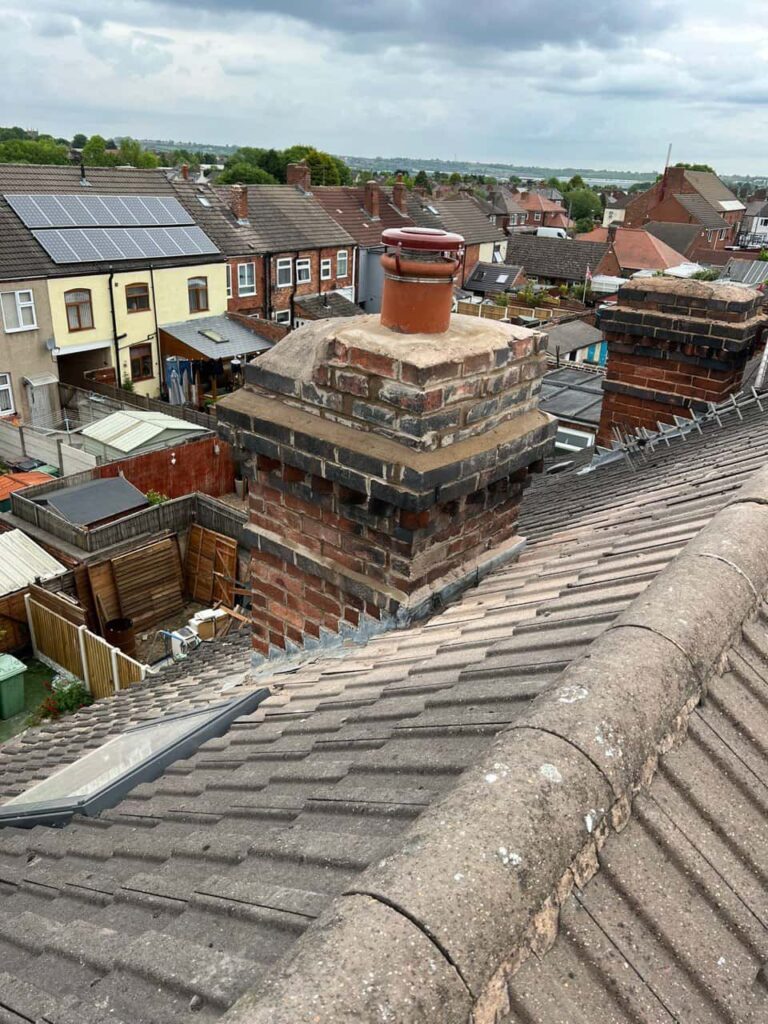
Individual roof repairs are often highly effective when a problem is clearly localised. A slipped tile, damaged section of flashing or isolated weakness can frequently be corrected without disturbing the remainder of a roof that is still performing well. Difficulties arise when new problems continue appearing despite previous repairs.
A roof may develop leaks in different locations, several components may begin deteriorating at a similar time, or repaired areas may remain sound while weaknesses emerge elsewhere. In these circumstances, repeatedly treating individual defects may no longer address the condition of the roof as a complete system.
For homeowners in Braunstone, Leicestershire, a professional assessment can help determine whether another targeted repair remains appropriate or whether a new roof could provide a more comprehensive solution to recurring problems.
When Can a New Roof Address Problems That Localised Repairs Cannot?
A new roof becomes worth considering when the problem is no longer one isolated defect but a wider pattern of declining performance.
This does not mean that several repairs automatically justify replacement. The important distinction is whether the existing roof still has enough sound, dependable material for further repairs to provide a worthwhile result.
A thorough assessment should establish what previous repairs have achieved, where new defects are developing and whether the wider roof remains capable of reliable performance.
Previous Repairs May Not Be the Problem
When a roof begins leaking again after repair work, it is easy to assume that the earlier repair has failed.
That is not necessarily what has happened.
The repaired area may remain completely sound while another section of the original roof has subsequently deteriorated. Water can also travel beneath roofing materials, meaning a new leak may become visible close to the location of an earlier problem even though it originates elsewhere.
Reviewing previous repair areas alongside the surrounding roof can reveal whether the issue is failed work or continuing deterioration elsewhere.
Repeated New Defects Can Indicate Wider Deterioration
A pattern of unrelated-looking defects deserves closer attention.
One year there may be displaced roofing materials, followed later by deteriorating flashing and then water ingress in another area. Each problem may be repairable individually, but together they can provide important information about the overall condition of the roof.
If several components are reaching a similar stage of deterioration, another localised repair may solve today’s problem without significantly improving the roof’s wider reliability.
This is where assessing the complete roofing system becomes particularly valuable.
Water Ingress From Different Areas Is an Important Sign
Recurring leaks do not always originate from the same defect.
If water has appeared in several internal locations or begins entering during different weather conditions, the roof may have more than one vulnerable area.
A new roof can address multiple weaknesses together by renewing the main covering and relevant roof details as part of one coordinated installation.
However, replacement should only be considered after the source and extent of the problems have been properly assessed. Some apparently widespread leaks can still originate from a specific repairable defect.
A Patchwork of Repairs Can Make the Wider Condition Harder to Judge
There is nothing inherently wrong with a roof having several repaired areas. Correctly completed local repairs can remain effective for many years.
The concern develops when repaired sections are surrounded by increasingly deteriorated original materials.
Over time, one section may be restored while the next weakest area begins to fail. The roof can gradually become a mixture of dependable repaired sections and ageing areas requiring further attention.
At this stage, the question is no longer simply whether another repair is technically possible. It is whether continuing with individual repairs is still the most appropriate way to restore consistent performance across the roof.
Problems Around Several Roof Details May Be Connected
Roof performance depends on more than tiles or slates.
Valleys, flashing, ridges, verges and junctions all contribute to managing rainfall and keeping moisture outside the property. Deterioration across several of these areas can create multiple potential routes for water ingress.
Individual repairs may address each weakness as it becomes apparent, but a broader renewal can allow these details to be considered together.
This can be particularly relevant where several components have aged alongside the main roof covering.
The Condition Beneath the Roof Covering Matters
Some problems cannot be fully understood by examining visible roofing materials alone.
The condition of underlying components can influence how effectively the roof performs. Where deterioration extends beyond individual surface materials, replacing a few tiles or repairing one detail may not address the full extent of the problem.
A professional assessment helps determine whether the issue is confined to accessible localised components or whether broader deterioration is present.
This distinction is essential before deciding that a new roof is required.
A New Roof Can Restore Consistency Across the Whole Surface
One potential advantage of roof replacement is consistency.
Instead of continuing with roofing materials of different ages and conditions, a new installation allows the covering to be renewed as one complete system. Relevant junctions and weatherproofing details can also be incorporated into the work rather than treated separately as problems arise.
This can remove the cycle where one ageing area is repaired only for another section to become the next weak point.
The value lies in restoring dependable overall performance rather than simply making the roof appear newer.
Replacement Can Address the Cause Rather Than Repeated Symptoms
Recurring roofing problems often become frustrating because each new defect appears to be different from the last.
In some cases, the common underlying issue is simply that the roof has deteriorated across multiple components. The symptoms may vary, but they all result from declining overall condition.
Where this is confirmed by inspection, replacement can address the broader cause rather than continuing to respond to individual symptoms.
This is different from replacing a roof because of one difficult leak. The decision should be based on the overall pattern and condition.
When Another Repair May Still Be the Better Answer
A history of repairs does not automatically mean that a new roof is necessary.
If the majority of the roof remains in sound condition and the latest problem can be traced to a specific defect, another targeted repair may be entirely appropriate.
Similarly, a recurring leak can sometimes be caused by one difficult-to-identify weakness rather than widespread deterioration.
A careful assessment may therefore prevent unnecessary replacement by confirming that the roof remains fundamentally serviceable.
The objective should always be to match the solution to the actual condition.
Roof Age Alone Should Not Determine the Decision
An older roof is not automatically an unreliable roof.
Roofing materials age at different rates depending on their type, exposure, installation and maintenance history. Some older roofs continue to perform effectively with occasional appropriate repairs.
Age becomes more significant when it is accompanied by widespread deterioration, recurring leaks and frequent new defects.
It is this combination of condition and performance, rather than age by itself, that can make replacement a more appropriate consideration.
Consider Whether Repairs Are Still Improving Overall Reliability
One useful question is whether each repair is making the roof more dependable as a whole.
If a localised defect is corrected and the roof then remains trouble-free, the repair has achieved its purpose. If new problems repeatedly appear elsewhere, the overall reliability may not be improving significantly.
This pattern can indicate that the roof has reached a stage where individual interventions are addressing only the weakest point at that particular moment.
Assessing the roof more broadly helps determine whether continuing this approach remains sensible.
Why Accurate Diagnosis Should Come Before Replacement
A new roof is a substantial change to a property, so the decision should be supported by a clear understanding of why existing repairs are no longer sufficient.
A professional assessment should consider:
- The condition of the main roof covering
- The number and distribution of defects
- Previous repair areas
- Recurring water ingress
- Roof junctions and weatherproofing details
- Signs of deterioration beneath visible materials
- Whether problems are isolated or connected
This provides a much stronger basis for deciding between further repairs and broader renewal.
A New Roof Should Provide More Than a Short-Term Fix
Where replacement is genuinely appropriate, its purpose is to restore the roof as a complete weather-resistant system.
Instead of dealing with individual defects one at a time, the roof covering and associated details can be approached together. This provides an opportunity to remove areas of widespread deterioration rather than continuing to manage them separately.
For a roof that has genuinely reached the point where local repairs are no longer restoring dependable performance, this comprehensive approach can provide a clearer long-term solution.
Professional Roof Assessment in Braunstone
Deciding between another repair and a new roof requires an understanding of both the latest problem and the history of the existing covering.
At Braunstone Roofing Repairs, we assess roofs in Braunstone, Leicestershire, with attention to previous repairs, current defects and the overall condition of the roofing system. The aim is to determine whether a targeted repair can restore reliable performance or whether deterioration has become sufficiently widespread for replacement to be considered.
This ensures that the recommended approach is based on the condition of the roof rather than simply the number of repairs it has received.
Conclusion
A new roof can solve problems that individual repairs keep missing when those problems are being caused by widespread deterioration rather than one isolated defect. Recurring leaks, new faults developing in different locations and several roofing components deteriorating together can all indicate that the roof needs to be considered as a complete system.
However, repeated problems do not automatically mean replacement is necessary. A detailed inspection may still identify a specific defect that can be repaired effectively.
If your roof in Braunstone, Leicestershire, continues to develop problems despite previous repairs, Braunstone Roofing Repairs can assess its overall condition and determine the most appropriate way forward. Contact our team to arrange a professional roof assessment and discuss whether targeted repair or broader renewal is suitable.
Call us on: 0116 216 5891
Click here to find out more about Braunstone Roofing Repairs
Click here to complete our contact form and see how we can help with your roofing needs.